Indianapolis Housing Inequality Has Deep Roots
By Jaydon Kurian, Indiana University ‘29
When people talk about eviction and housing instability in Indianapolis today, it can sound like a new crisis. But it is not new. These problems have deep roots in public policy, city planning, and decisions that pushed people out of their homes long before today's numerous eviction filings. To understand housing injustice in Indianapolis now, we have to understand how displacement happened before. Researchers, legal advocates, and community organizations have been documenting and fighting these patterns for years: and their work forms the foundation for what follows.
One major example is the construction of interstate highways. In the 1950s, 1960s, and early 1970s, highway building displaced thousands of families in Indiana, and most of that displacement happened in Marion County. Community members warned at public hearings that compensation would not be enough to buy replacement housing. Black ministers, civic leaders, and neighborhood advocates also argued that these routes were being placed through Black neighborhoods and low-income communities on purpose. In other words, housing destruction was not an accident of development. It was part of how development worked.
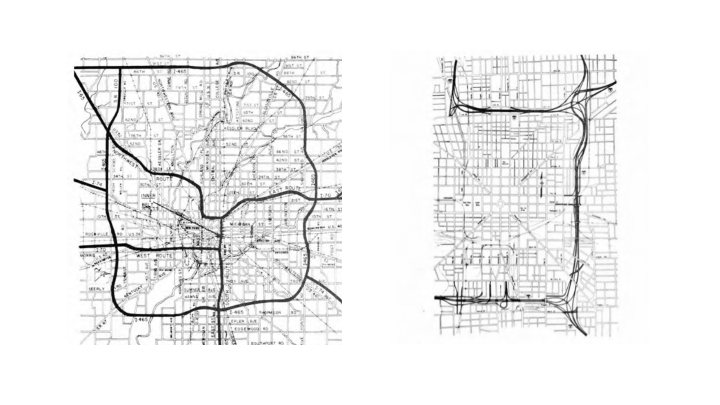
Figure 1 and 2: Indiana Interstate Highway Plan of 1957 and Indianapolis Inner Belt Design of 1970
Another major example is urban renewal and the expansion of the medical center and IUPUI on the Near Westside. Black neighborhoods were labeled blighted, cleared, and taken for institutional growth. Families lost homes, churches, businesses, and long-standing community ties. In many cases, the land did not even become new housing. It became parking lots, campus space, or empty land held for future use. Residents were told this was progress, but for many Indianapolis families, especially Black families, progress meant removal. Journalists at Mirror Indy have documented this history in depth, gathering accounts from former residents of what was once known as Indianapolis' Black Wall Street: a thriving cultural and economic corridor that was effectively erased as Indiana University acquired roughly 300 acres to found IUPUI in the 1960s. The city is also actively working to reckon with that legacy: a 2026 community project led by local consultant Joi Harmon has been gathering residents' family histories to document the long-term impact of these decisions on Black wealth in Indianapolis.
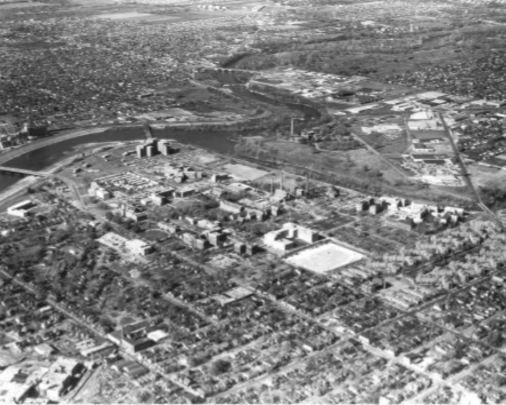
Figure 3: Near Westside homes in 1958, soon razed for medical center expansion 25 years later.
This history matters because the patterns are familiar. The same communities that were hit hardest by highway construction, clearance, and disinvestment are often the ones facing the highest housing pressure today. Eviction is not just about one missed rent payment or one landlord-tenant conflict. It is connected to a longer history of who had access to stable housing, who was denied investment, and who was expected to absorb the cost of city growth. That is part of why housing inequality in Indianapolis feels so persistent.
The Indy Housing Project already reminds readers that eviction is a systemic failure, not simply a personal one. This history fully explain why. Indianapolis has dealt with displacement before, through highways, redevelopment, and campus expansion across the decades. Today’s housing instability follows those same lines. If advocates, residents, and policymakers want to build something better, they have to start by recognizing that this injustice was built over time. And if it was built by policy, it can also be changed by policy.